
Hi, I'm Alex 👋🏼
Sarah brought me in to show you how to work with AI without handing over the parts that make the work yours.
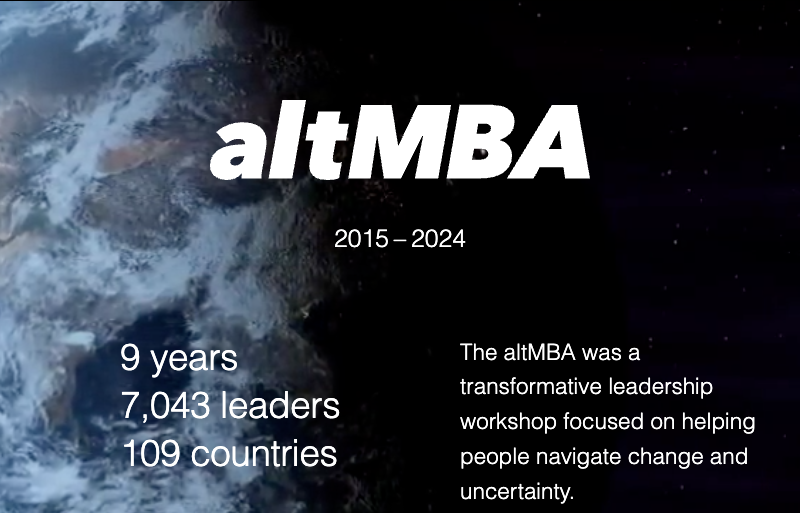
For a decade I was Creative Director for Seth Godin, and from 2015 to 2024 I ran the altMBA, building the systems that scaled its workshops to thousands of students across 109 countries. I've worked with Amazon, Microsoft, and Nike. These days I build with AI to run my own business, and I talk, write, and teach about building with AI.
What I care about is the same thing you do: getting real help from these tools, and feeling confident that whatever goes out is right and still sounds like me.
What we covered
The four skills behind confident AI use
Delegation: decide what to hand off
This isn't a question about difficulty, or importance, or what the machine could technically manage. It's a question about you. Take a task on your desk this week and ask: would I miss doing it, or would I just worry about how it's done? If you wouldn't miss it, it isn't your craft, and it's a candidate to hand off. What you keep is the work only you do.
Description: ask for what you actually want
Unlike anyone you've ever hired, AI will happily run the exact same process over and over. That's worth something if you tell it what the process is. Do the job yourself with a piece of paper next to you and write down every step. Then hand that over and turn it into a skill: a page of plain English that reads like what you'd tell a new hire on their first afternoon. Your structure, your voice rules, what never goes in. Anything you've explained more than twice is a skill waiting to be written.
Discernment: judge what comes back
Once the work comes back, you hold the standards. That's the job you've been doing all along. Test yours by asking whether they're falsifiable: could someone get this wrong on purpose? If not, they're too subjective to hand to AI or to a person. To calibrate, give it a task you know cold, run the same prompt three times, and study how the three results differ. When the work misses, you go back to description with feedback. Some jobs take one pass through that loop. Some take several.
Diligence: stay responsible for what goes out
Delegation asks which work is yours. Diligence asks what you owe the people on the other side of it: the client emailing you, the vendor on the call, the customers whose data you're holding. A big company has a board, a compliance office, and auditors to keep those promises. You are all of that. So build a system where a mistake can't cost you something you can't pay: start with restrictive permissions and loosen them as the work proves out, set expectations with your partners so nothing surprises them, and decide what you'd do about a mistake while the emergency is still hypothetical. Then you sign your name to the work, not because you reviewed every line, but because you trust the process that made it.
Take this home
Build your brief, then run any job through the four skills
Two prompts, not worksheets. Paste the first into Claude and it interviews you, then builds a short brief about your business that you save and reuse. Paste the second and it walks any real job through all four skills, from what to hand off to what to check before it goes out.
Business context prompt ↓ Run a job through the 4D framework ↓
About the framework
The four skills are drawn from the AI Fluency Framework developed by Prof. Rick Dakan (Ringling College of Art and Design) and Prof. Joseph Feller (University College Cork), released under the CC BY-NC-SA 4.0 license.
Get my best thinking on AI delivered to your inbox, infrequently
A short introductory sequence to help you understand how I see AI, and the opportunities and drawbacks it brings. Then emails only when there's something truly worth sharing.
Want to talk through your own setup?
Bring a real job to a free call
Thirty minutes on where AI could save you the most time, and where to be careful. Bring something actually on your plate and you'll leave knowing what your next step is.